






Estate rubbish clearance for Clarendon Road tenants Finsbury Park
Posted on 13/07/2026

If you live on Clarendon Road, you already know the rhythm of estate life in Finsbury Park: narrow stairwells, shared hallways, busy bin stores, the occasional pile of old furniture waiting just a bit too long. Estate rubbish clearance for Clarendon Road tenants Finsbury Park is really about dealing with that mess in a way that is quick, considerate, and properly handled. Not just "taken away", but cleared with the shared building in mind.
This guide explains what estate rubbish clearance covers, how the process usually works, when it makes sense, and how to avoid the common headaches that come with bulky waste in a communal setting. We will also look at practical steps, best practices, compliance points, and a few real-world tips that make life easier for tenants and landlords alike. Let's face it, nobody wants the lift held open by a broken wardrobe for half the afternoon.
For tenants who are moving out, replacing furniture, or simply trying to reclaim a bit of space, the right approach saves time and keeps neighbours happier. It also helps protect the estate's shared areas, which is often the difference between a smooth clearance and a very awkward email from the managing agent.
Why Estate rubbish clearance for Clarendon Road tenants Finsbury Park Matters
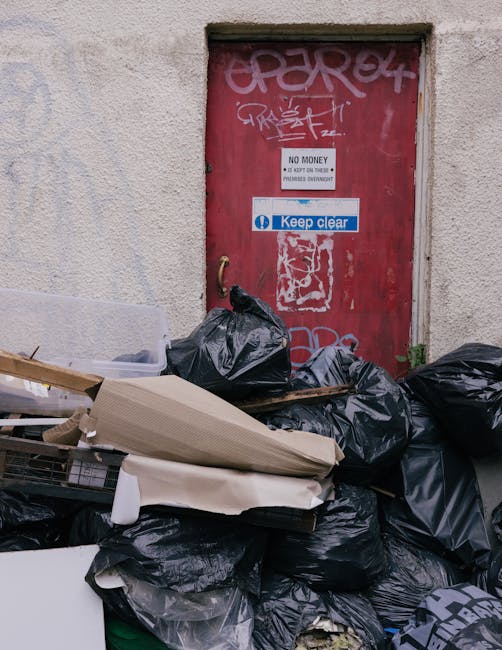
Estate rubbish clearance is not the same as putting a few bags outside on collection day. In an estate environment, waste has to move through shared spaces, and those spaces are used by everyone: families, working tenants, people with prams, cleaners, delivery drivers, and sometimes people carrying dinner shopping at the exact wrong moment. One abandoned sofa can quickly become everyone's problem.
Clarendon Road, like many parts of Finsbury Park, tends to sit within a dense residential pattern where access, parking, and bin storage all matter. That changes the job. Clearance needs to be planned around narrow access routes, building rules, and the simple reality that a fast job is usually a safer job. If waste is left in communal areas, you can end up with pest issues, odours, complaints, or blocked fire routes. None of that is ideal.
There is also a trust element. Tenants often want to know that waste is handled responsibly, especially where mixed materials are involved. A proper estate clearance should separate reusable items, recyclable materials, and general rubbish wherever possible. If you are already thinking in that direction, the site's recycling and sustainability approach is worth a look because it reflects the kind of care many residents now expect.
Another reason this matters is timing. A cluttered hallway on a Friday evening can feel ten times worse than it looked at lunchtime. People want certainty. They want the old mattress gone, the broken desk removed, and the building returned to normal with as little fuss as possible. That is the heart of the service.
How Estate rubbish clearance for Clarendon Road tenants Finsbury Park Works
In practice, estate rubbish clearance usually follows a straightforward sequence, but the quality is in the planning. The job begins with understanding what needs removing: single bulky items, full room contents, bags of mixed rubbish, old appliances, or post-move waste. A good provider will ask the right questions before any van arrives.
For Clarendon Road tenants, access details are particularly important. Is there a lift? Are there time restrictions on moving large items? Can a vehicle stop nearby, or will the team need to carry waste a longer distance? These little details affect the time, the number of operatives needed, and the overall cost. It is not glamorous stuff, but it matters more than people think.
On the day, the team should arrive ready to assess the load, protect the route where needed, and remove the items without leaving damage behind. That usually means careful lifting, sensible stacking, and a bit of old-fashioned common sense. You will notice the difference between a team that rushes and one that knows estates well; the latter usually feels calm, almost boring, and in waste clearance boring is good.
If you are comparing wider support options, the site's services overview can help you understand where estate clearance sits alongside other removal and clearance work. And if the job is part of a bigger move or flat reset, waste clearance in Finsbury Park can be a useful broader service to compare against.
Most estate clearances are completed in a single visit, assuming the access is clear and the load is known in advance. That said, awkward furniture, heavy white goods, or hidden items in storage cages can make the process slower. Truth be told, the more honest the initial description, the smoother everything goes.
Key Benefits and Practical Advantages
There are obvious benefits, and a few that people only notice afterwards.
- Less disruption for neighbours: a well-organised clearance avoids long hallway blockages and repeated trips through shared areas.
- Safer communal spaces: fewer trip hazards, less loose waste, and a lower chance of items being left in fire escape routes.
- Faster turnover for moving tenants: when you are between tenancies or handing back keys, speed matters.
- Better presentation: clean, empty spaces make inspections, viewings, and end-of-tenancy checks far less stressful.
- Responsible disposal: sorting and recycling where possible supports a more sustainable outcome.
There is also a psychological benefit that is hard to measure but very real. A messy flat can quietly drain your energy. Once the waste is gone, the place feels lighter. The light comes in differently. Sounds a bit sentimental, maybe, but anyone who has moved out of a cluttered flat knows exactly what I mean.
For landlords and managing agents, a good estate clearance can reduce the knock-on effects of abandoned items and help keep turnover efficient. For tenants, it can prevent disputes about communal mess or damage. For the building itself, it just makes daily life smoother. Simple as that.
If bulky items are involved, the broader rubbish removal in Finsbury Park service is often the most practical route, especially when you need more than a standard bin run but less than a full household clearance. For renovation leftovers, builders waste disposal in Finsbury Park is another relevant option.
Who This Is For and When It Makes Sense
This kind of clearance is useful for a surprisingly wide mix of people. You might be a tenant clearing out after a move, a flatmate group splitting old furniture, or someone who simply cannot keep another broken chair in the corner of the bedroom. It happens more often than people admit.
It makes particular sense in these situations:
- end-of-tenancy clear-outs
- replacement of damaged or unwanted furniture
- post-renovation and decorating waste
- shared flat decluttering
- storage cupboard and bin store clearances
- landlord or letting-agent preparation between occupancies
If your building has a communal refuse area, clearance becomes even more important because leaving waste "just for now" can create confusion about whose responsibility it is. And that is where small issues snowball. One bag becomes three. One mattress becomes everyone's talking point for the week.
For tenants in the area who are also thinking about local timing and access around transport routes, the article on rubbish removal near Finsbury Park Station offers useful context on working in busy neighbourhoods. Likewise, if you are managing a broader property change, the piece on house clearance on Stroud Green Road is a helpful local reference point.
Step-by-Step Guidance
If you want the process to go smoothly, a little structure helps. Here is the approach we would recommend.
- List everything that needs clearing. Separate furniture, general waste, electrical items, and anything that may need special handling.
- Check building access. Note lift availability, stair width, entry codes, parking restrictions, and any estate rules.
- Take a few photos. This helps with quoting and avoids surprises on the day. A couple of quick pictures usually do the job.
- Decide what can be reused or donated. Some items are not waste at all; they may just need moving elsewhere.
- Request a clear quote. Make sure the quote reflects access, volume, item type, and any extra labour.
- Prepare the route. Move smaller items out of the way, unlock gates if needed, and warn neighbours if large items will be carried through shared areas.
- Confirm collection timing. A precise time window reduces stress and avoids building congestion.
- Keep essential items separate. Sounds obvious, but in a hurried flat tidy-up it is easy to mix up what stays and what goes.
One useful rule: if you would be annoyed to see it vanish by mistake, set it aside early. It sounds basic, but in a cluttered hallway at 8.15 a.m., basic is brilliant.
Expert Tips for Better Results
Small adjustments make a big difference, especially in estate settings where access is tighter than in a standard house clearance.
- Clear the route first. Move shoes, mats, pushchairs, bikes, and loose bags out of the way before the team arrives.
- Group items by type. Furniture together, bagged waste together, and electricals together helps the clearance move faster.
- Be realistic about weight. That "light" wardrobe can be heavier than expected once it is tipped on its side. Happens all the time.
- Don't leave the worst job until last. If you know there is a bulky item in a tight corner, mention it early.
- Ask how recycling is handled. Responsible operators should be able to explain their disposal approach in plain English.
Another tip: if your building is busy during school-run hours or evening commutes, schedule the collection outside those peaks where possible. The difference in stress levels is noticeable. A quiet mid-morning slot often works better than a rushed end-of-day slot, particularly on residential streets.
And yes, it helps to be a little ruthless. If you have not used that side table since the last heatwave, it might be time.
Common Mistakes to Avoid
Most problems with estate rubbish clearance are avoidable, which is both reassuring and mildly annoying because it means people keep making the same ones.
- Leaving waste in the communal hall "temporarily". Temporary has a way of becoming permanent.
- Underestimating volume. Two bags in the bedroom can look like half a van once gathered together.
- Forgetting access restrictions. A clearance team cannot magic a sofa around a locked gate or tiny stairwell.
- Mixing rubbish with valuables. Documents, chargers, remotes, keys, and keepsakes get lost this way all the time.
- Not checking item categories. Certain electrical or heavy items may need specific handling.
- Choosing purely on price. The cheapest option is not always the cleanest, safest, or most reliable.
One of the trickiest errors is failing to tell the whole story. If there is attic junk, a locked store cage, or a pile behind a wardrobe that nobody wants to talk about, mention it. Better a slightly longer quote than an unpleasant surprise halfway through the job.
Tools, Resources and Recommendations
You do not need specialist kit for a basic tenant clearance, but a few practical items make the process easier.
- Heavy-duty bags: useful for broken household items, bedding, and mixed waste.
- Labels or tape: a simple way to mark what stays and what goes.
- Gloves: especially if you are moving old storage items or dusty furniture.
- Measuring tape: handy for checking whether a large item can pass through the stairwell or lift.
- Phone camera: quick photos are often enough to help with planning.
For readers who want to understand the wider service picture, about the company and our services are sensible pages to review before booking. If your clearance overlaps with other types of removal, the dedicated pages for house clearance in Finsbury Park and office clearance in Finsbury Park can also help you match the right service to the job.
There is also a practical trust angle. Before agreeing to any clearance, it is sensible to review service terms, safety information, and payment security details. Those pages are not exciting, granted, but they are the difference between a confident booking and a slightly uneasy one. A good provider should make that information easy to find.
Law, Compliance, Standards, or Best Practice
Estate clearance in the UK sits within a wider framework of waste handling expectations, duty of care, and safety best practice. You do not need to be a legal expert to make sensible choices, but you should expect a reputable operator to take waste handling seriously.
In plain English, that means waste should be collected, transported, and disposed of responsibly. It should not be fly-tipped. It should not be dumped in a nearby lane. It should not quietly become someone else's problem. The person arranging the clearance should also avoid leaving waste in communal areas where it could block access or cause a nuisance.
If electrical items, sharp materials, or heavy furniture are involved, safe handling matters. That includes proper lifting technique, careful movement in shared spaces, and sensible packing in the vehicle. Insurance and safety are worth attention too, especially in estates where stairs, lifts, and tight corners create extra risk. If a company cannot explain how it protects both people and property, that is a red flag, honestly.
The relevant best practice is straightforward:
- provide accurate information about the waste
- keep pathways clear and safe
- avoid blocking shared access
- separate reusable or recyclable items where practical
- use a provider that handles disposal properly
That may sound obvious, but in busy estate settings obvious advice is often the most useful. Nobody needs a dramatic lesson in rubbish; they just want the job done well.
Options, Methods, or Comparison Table
There is more than one way to handle estate rubbish, but not every method suits Clarendon Road tenants. The best choice depends on volume, urgency, and access.
| Method | Best for | Pros | Watch-outs |
|---|---|---|---|
| Self-clearance | Very small amounts of bagged waste | Can be low cost if you already have transport | Time-consuming, physically tiring, and tricky with bulky items |
| Shared-van collection | Mixed household rubbish and a few bulky items | Flexible, practical, and often quick | Needs clear item lists and access details |
| Full clearance service | Large flat clear-outs or end-of-tenancy jobs | More complete, less hassle, suited to bigger volume | May cost more than a small collection |
| Specialist item removal | Builders waste, heavy items, or awkward loads | Better handling of specific waste streams | Needs accurate categorisation beforehand |
For most Clarendon Road tenants, a mixed-item collection or a broader waste clearance service is the most practical middle ground. It is flexible enough for estate life without becoming overcomplicated. If the job is part of a refurbishment, the builders waste route may be more suitable; if it is mostly household clutter, general rubbish removal usually fits better.
Case Study or Real-World Example
Picture a tenant in a shared Clarendon Road flat preparing to move out at the end of the month. There is a broken chest of drawers, two rolled rugs, a desk chair with one wheel missing, several black bags, and a few bits of packaging left from new furniture. Nothing dramatic, but enough to create a bottleneck in the hallway.
The first mistake would be trying to move everything out in one frantic evening. Better to sort it the day before, separate what is staying, and mark any usable items for donation or reuse. In this kind of situation, the biggest win is usually not speed, it is clarity. Once the items are grouped and the access route is clear, the collection becomes simple.
What made the difference in a similar real-world scenario was a quick photo set, a clear list of items, and advance notice that the building lift was small. That meant the team brought the right approach and no one had to wrestle a wardrobe down the stairs at the last second. The flat was cleared, the hallway was restored, and the tenant could hand back the keys without the low-level panic that often creeps into move-out week.
It is a small example, but a common one. And to be fair, the best clearance jobs are the ones that leave people thinking, "Right, that was easier than I expected."
Practical Checklist
Use this before booking or carrying out an estate clearance on Clarendon Road.
- List every item that needs removing.
- Check whether any items can be reused or donated.
- Measure large furniture against the lift, stairwell, and doorway.
- Confirm building rules for access, timing, and parking.
- Take photos of the waste for quoting.
- Keep valuables and documents separate.
- Clear the hallway and protect shared spaces where needed.
- Ask how recycling and disposal will be handled.
- Confirm the appointment time and any contact details.
- Make sure the final route to the vehicle is safe and unobstructed.
If you can tick most of those off, you are already ahead of the game.
Get a free quote today and see how much you can save.
Conclusion
Estate rubbish clearance for Clarendon Road tenants Finsbury Park is really about making a shared building work properly again. The job may start with a broken chair or a pile of bags, but the real value is in keeping communal areas safe, keeping neighbours happy, and helping tenants move on without unnecessary stress.
The best results come from clear planning, honest item lists, and a service that understands estate access. If you treat the process as a quick reset rather than a last-minute scramble, it becomes far less disruptive. And that matters in a place where people are coming and going all day, every day.
When done well, clearance is one of those jobs you barely think about afterwards. The hallway is clear, the flat feels calmer, and the building just breathes a bit easier. Small thing, maybe. But on a busy London street, small things count.



 Tipper Van - Rubbish Removal and Builders Waste Clearance Prices in Finsbury Park, N4
 Luton Van - Rubbish Removal and Builders Waste Clearance Prices in Finsbury Park, N4